Blog
Insights from the HarmCheck team on AI compliance, deterministic risk detection, and trustworthy tooling for legal and regulated industries.
Alphy Staff
June 1, 2026 · 3 min read
Lawyers Know AI Hallucinates. They Keep Citing It Anyway.
Every lawyer knows the rule: Don’t cite a case you haven’t checked. Sounds simple. And yet, across the country, judges keep sanctioning lawyers for submitting briefs that include fake case citations, invented quotations and legal authorities that don’t exist.
Alphy Staff
May 27, 2026 · 3 min read
A Law License, 30 Defendants, and a Decade of Silence
Insider trading rarely begins with a trade. It begins with access — and a decision about what to do with it. That’s the uncomfortable lesson at the center of one of the largest insider trading prosecutions in recent memory, and one that has put elite law-firm controls under renewed scrutiny.
Alphy Staff
May 13, 2026 · 5 min read
Before Workplace Misconduct Becomes a Headline, It Leaves Signals
A high-profile JPMorgan harassment lawsuit shows what every compliance, HR, and legal team already knows: workplace misconduct leaves a digital trail. Here's how AI like HarmCheck surfaces the signals before they become front-page news.
Alphy Staff
May 5, 2026 · 3 min read
We Don’t Hallucinate. Why That Matters In Legal Review.
Last week, Sullivan & Cromwell did something you rarely see from a white-shoe law firm: They apologized to a court. The reason? AI hallucinations in a legal filing. Here’s why GenAI was built to sound right, but legal work requires being provably right — and how HarmCheck is built differently.
Alphy Staff
April 21, 2026 · 3 min read
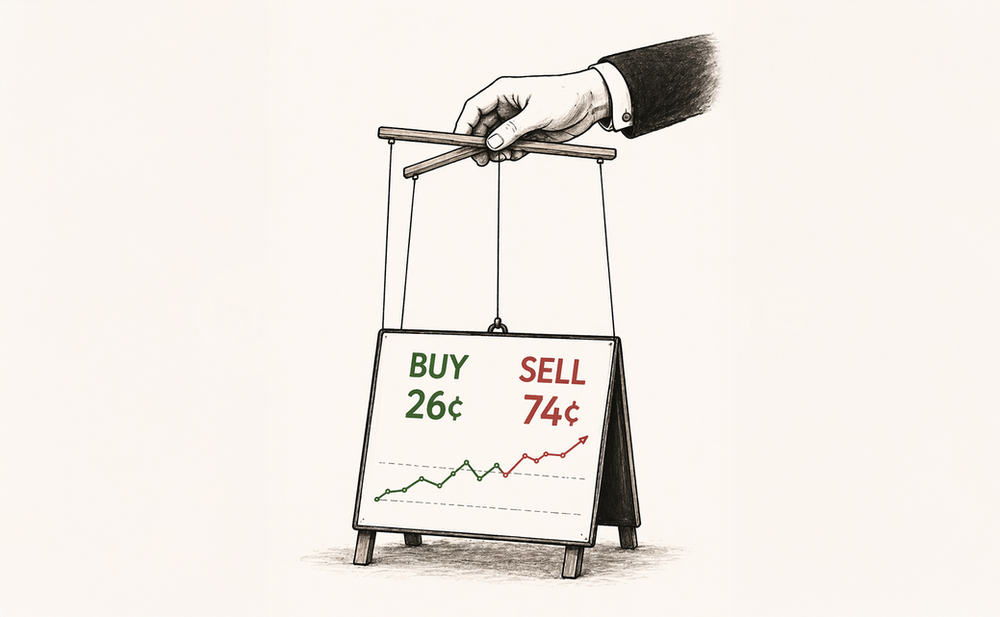
The $300,000 Bet That Shouldn’t Exist
Prediction markets like Kalshi and Polymarket are turning insider information into instant payouts. The compliance blind spot isn't the trade — it's the communication.
Alphy Co
April 7, 2026 · 3 min read
Alphy Adds Monica Alvarez-Mitchell and Radicle Impact’s Dan Skaff to Board as HarmCheck Gains Traction in Financial Services and Legal AI
Alphy adds investor Monica Alvarez-Mitchell and Radicle Impact co-founder Dan Skaff to its board as HarmCheck expands across financial services and legal AI.
Alphy Staff
March 31, 2026 · 4 min read
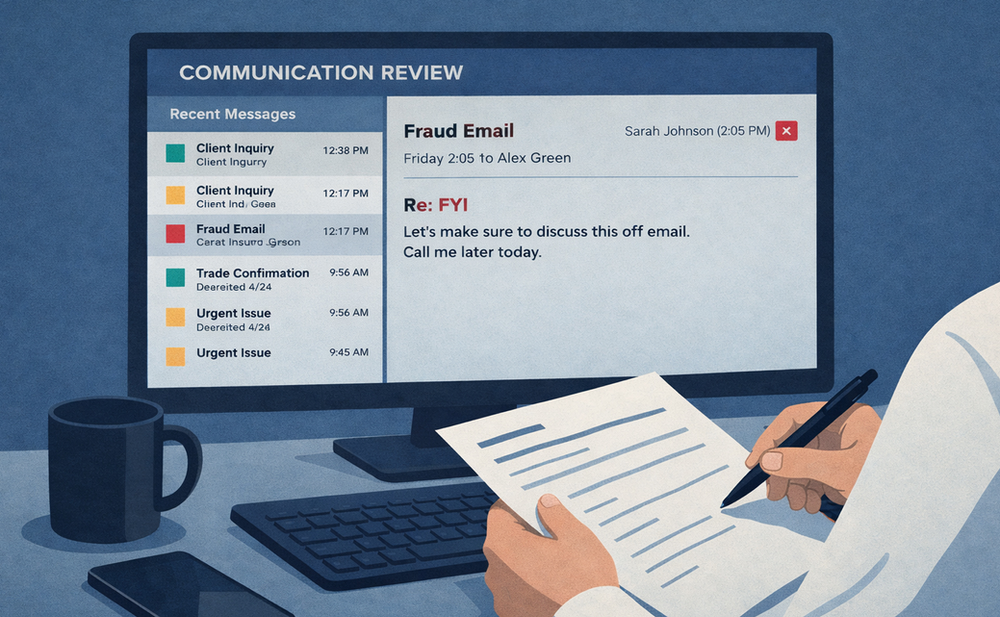
FINRA Rule 3110: What Communication Supervision Means in Practice
FINRA Rule 3110 requires firms to supervise communications in practice, not just on paper. Here's what "reasonably designed" actually looks like today.
Alphy Staff
March 24, 2026 · 3 min read
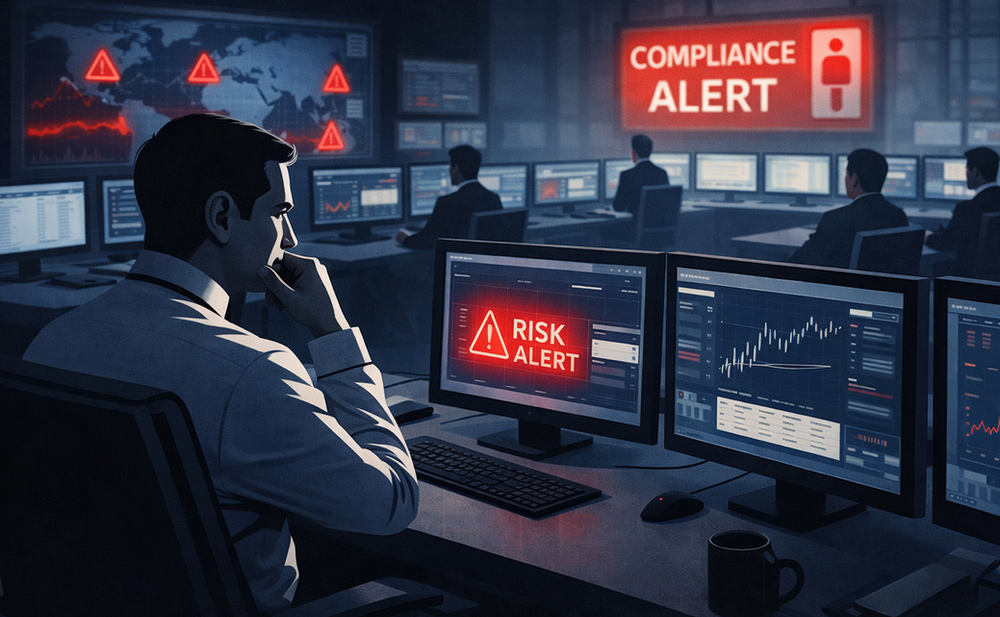
Why Control Room Managers Are Losing Sleep Over Deal Communications
Inside an investment bank during a live deal, communication moves across email, Teams, Bloomberg chat, and more. Why control rooms can't keep up — and what's broken.

Alphy Staff
March 17, 2026 · 2 min read
What Is MNPI and Why Your Bankers' Emails Are a Liability
MNPI doesn't have to be a smoking gun to be a liability. A casual mention of a pending acquisition in a Teams message. A deal codename dropped in an email chain that crosses information barriers. A ticker or crypto symbol missed by restricted list technology because it is a common word. A banker on a live deal responding to an inquiry from the equity research side. None of these feel like violations in the moment. All of them can become one on review.

Alphy Staff
February 17, 2026 · 3 min read
Texas Snapchat Lawsuit Over Teen Safety: Why Internal Controls Matter
Legal scrutiny of social media platforms’ treatment of minors is intensifying nationwide, with states, local governments and school districts going to court over child safety.Texas added to that pressure on Feb. 11, filing suit against Snap Inc. The complaint, centered on deceptive trade practices, alleges that minors on Snapchat are routinely exposed to explicit sexual content, drug references, intense profanity, and self-harm material — despite the app’s “12+” or “Teen” rating and assertions t

Alphy Staff
December 16, 2025 · 2 min read
Housing Oversight, Power Abuse and Fair Housing Act Liability
“No one should have to endure sexual harassment to keep a roof over his or her head.”That’s what Harmeet K. Dhillon, the assistant attorney general of the Justice Department’s Civil Rights Division, said in going on the legal offensive against a former Arkansas landlord and the property owner the landlord worked for. The DOJ’s lawsuit, filed in the U.S. District Court for the Eastern District of Arkansas in November, names Thomas Ray Kelso, 74, and Avatar Investments LLC, and alleges discriminat

Alphy Staff
December 9, 2025 · 3 min read
Blackpool Victoria: Inside a British Hospital’s Culture of Harm
A leaked report by UK’s Royal College of Physicians paints a bleak and disturbing picture of life inside Blackpool Victoria Hospital on England’s northwest coast: systemic bullying, harassment, racial discrimination, sexual assault, murder, and a culture of fear so deep that staff felt they had to “keep their heads down” rather than speak out. What’s staggering is how this culture didn’t just harm staff, it put patients at risk, according to the report, first chronicled by The Guardian on Dec. 3

Julian Guthrie
December 2, 2025 · 3 min read
The Epstein Emails: A Different Kind of Insider Trading
A recent New York Times opinion piece on the Epstein emails is one of the most revealing essays I’ve read about the intersection of privilege, power, and language. It’s a study not only of abuse, but of the coded ways elite circles communicate, and what those patterns tell us about status, access, and the quiet barter economy of non-public information.The guest columnist, Anand Giridharadas, makes a compelling case for what he calls the “Epstein class,” writing: “People are right to sense that,
Alphy Staff
November 25, 2025 · 2 min read
When Remediation Needs Remediation: The Risk No One Talks About
Banks brace for AML failures. They brace for fines, monitorships, headlines, and massive cleanup programs. But here’s the risk almost no one prepares for: What happens when the remediation itself becomes the next compliance problem?That’s the uncomfortable question raised by the unfolding TD Bank story — where a multibillion-dollar anti-money laundering settlement has now collided with allegations that the bank’s internal cleanup disproportionately targeted employees of Chinese heritage, accordi

Alphy Staff
November 18, 2025 · 2 min read
When Stock Trades Topple a Leader: The Compliance Warning in the Kugler Scandal
SEC and FINRA rules require firms to maintain, monitor, and enforce restricted lists to prevent even the appearance of insider trading. Even unintentional missteps can destabilize an institution. Will you catch the next problem quietly — or read about it in tomorrow’s headlines?

Sheldon Popiel
October 21, 2025 · 2 min read
Expanded features, a new advisor, and a chimp you’ll love
See what’s new in HarmCheck — from expanded detection capabilities and eDiscovery tools to our newest compliance advisor (and a surprise guest in a tie).

Julian Guthrie
September 23, 2025 · 3 min read
Debanking Under Fire
Debanking — the closure of customer accounts by banks — is drawing new scrutiny from regulators, customers, and the public. A recent case involving Bank of America highlights why compliance teams need tools like HarmCheck to stay ahead.

Julian Guthrie
September 16, 2025 · 2 min read
Risk Mitigation Isn’t Just Compliance — It’s Strategy
Too often, organizations treat risk mitigation as a compliance function: audits, checklists, and reactive crisis response. But this is a limited view. The smarter path is to design for safety, ethics, and regulatory awareness from the beginning. In other words, risk mitigation isn’t just compliance, it is part of corporate strategy.

Julian Guthrie
September 9, 2025 · 2 min read
When Words Betray: What Insider Trading Scandals Teach Us
Insider trading rarely begins with a trade. It starts with a word, a phrase, a suggestion, or a hint.Just this summer, Duncan Stewart pleaded guilty in Australia to insider trading tied to a $776 million takeover of Kidman Resources by Wesfarmers and his sentencing hearing is slated for Sept. 15. An investment banker, Stewart allegedly acted on information from his brother-in-law, who was CEO of the target company, according to the Australian Securities & Investment Commission. The scandal cost

Julian Guthrie
September 3, 2025 · 2 min read
The Power of Tactical Empathy
When I founded Alphy and closed our first venture round, a master-of-the-universe investor told me: “Guthrie, you’re going to have to be more mercenary. You’re too nice. Too empathetic.”At the time, as our team set out to build a new technology, I wondered if he was right. In business, “empathy” is often coded as weakness — something softer and secondary to the hard edges of competition, negotiation, and deal-making. Elon Musk even declared recently, “The fundamental weakness of Western civiliza

Sheldon Popiel
August 27, 2025 · 3 min read
How to Create a Professional Video Using Only AI: A Step-by-Step Guide
This is a step-by-step guide to creating a marketing video almost entirely with AI.

Alphy Staff
August 26, 2025 · 3 min read
Compliance Expert David Lang on How Alphy’s RLC Strengthens Restricted List Detection
When it comes to compliance and market integrity, few people match David Lang's depth of experience. A former securities prosecutor and global chief compliance officer at Royal Bank of Canada — with responsibilities across 29 markets over 23 years — Lang now serves as a compliance advisor to Alphy.We spoke with him about one of the most challenging areas in financial compliance — insider trading detection — and the critical role of spotting “tipping” before it’s too late. He shared exclusive ins

Alphy Co
August 19, 2025 · 2 min read
The Long Game of Fair Lending Compliance: A Conversation with Tory Haggerty
Many lenders assume risk is down because federal oversight has eased. That’s a mistake. States are stepping in, advocacy groups are active, and civil liability is real.

Alphy Staff
August 12, 2025 · 3 min read
Sydney Sweeney American Eagle Ad Shows Ambiguity Has Risk
Actress Sydney Sweeney’s new American Eagle ad has become a cultural Rorschach test — the kind of moment where the same few seconds can mean entirely different things depending on who’s watching.In the spot, she talks about how “genes are passed down from parents to offspring, often determining traits like hair color, personality, even eye color.” She’s lying supine as the camera sweeps from her legs to her head. As it reaches her blonde-haired, blue-eyed face, she says four words that are eithe

Alphy Staff
August 5, 2025 · 3 min read
Freepoint’s Insider Trading Allegations Raise New Questions for Compliance
Andrew Martin spent 10 years as a top oil analyst at Freepoint Commodities. His models helped drive hundreds of millions in profits. But in a recent lawsuit, he alleges his career was derailed by something more troubling than market volatility: internal pressure to cross legal and ethical lines.According to the complaint, filed in New York State Supreme Court in July, Martin was urged to source proprietary data without proper authorization and to extract confidential information from industry co

Alphy Staff
July 29, 2025 · 3 min read
Coldplay’s Viral Concert Clip and What It Reveals About Workplace Communication Risk
On July 16, at Coldplay's sold-out concert in Foxborough, Mass., the band's trademark "Jumbotron Song" took a surreal turn. Lead singer Chris Martin joked about a couple who'd been beamed onto the massive screen — and when the kiss-cam spotlight hit, they awkwardly ducked away. Moments later, the world learned that Andy Byron, CEO of Astronomer, and Kristin Cabot, the company’s head of HR, were caught mid-embrace. The viral concert clip exploded across TikTok and became a cultural flashpoint.Wha

Carolyne Zinko
July 15, 2025 · 2 min read
When AI Bias Isn’t the Whole Problem: What the Earnest Settlement Tells Us About Human Oversight
A recent $2.5 million settlement between the Massachusetts Attorney General and student loan provider Earnest is making waves — and it should be. At first glance, it looks like another story of flawed AI lending models. But read the settlement’s fine print, and you’ll see something deeper: It wasn’t just the algorithms that failed. It was the humans, too.Earnest used algorithmic underwriting tools to approve or deny loans and set interest rates. The models included inputs like a borrower’s Cohor
Carolyne Zinko
May 20, 2025 · 3 min read
VIPs Like P. Diddy Don’t Just End Up in Court. Their Words Help Get Them There.
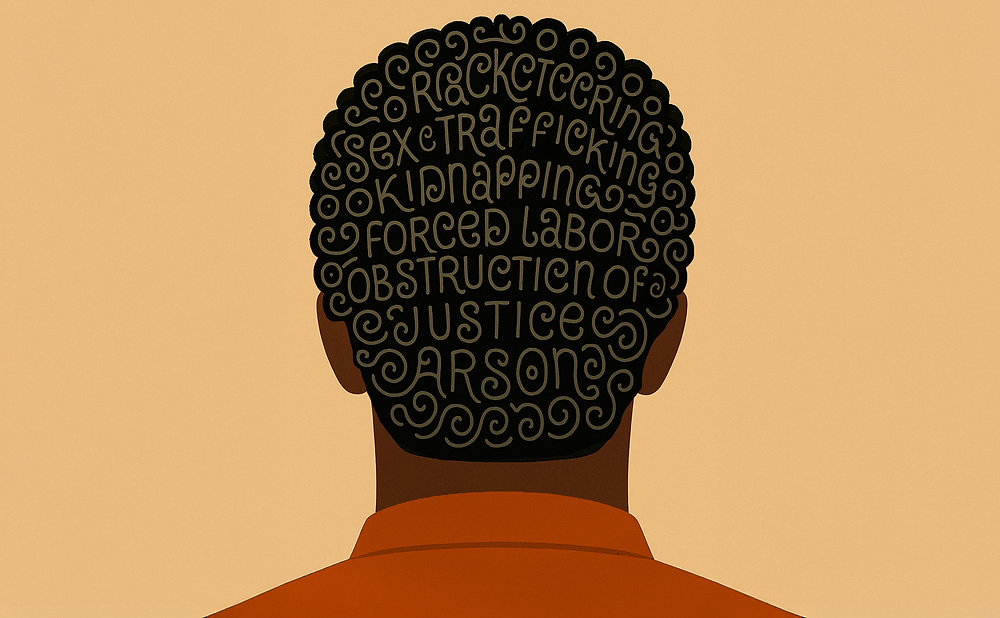
Sean “Diddy” Combs, once a star of the hip-hop world, is now in the spotlight for facing some of the most serious federal charges imaginable: racketeering, sex trafficking, kidnapping, forced labor, obstruction of justice, arson, and more. According to the indictment now unfolding in U.S. District Court in New York, Combs didn’t act alone — prosecutors say he operated a criminal enterprise for over 20 years, using his business empire and inner circle to carry out and conceal abuse.The charges re

Carolyne Zinko
May 13, 2025 · 3 min read
Sexual Harassment Compliance Risk: What the Appraisal Institute Case Reveals About Early Detection and Digital Oversight
Has your boss ever hugged you at work? Or stood beside you and touched you in a way that made you freeze? Multiple women say that’s what Craig Steinley did while serving in senior leadership at the Appraisal Institute — the trade group that helps certify more than 70,000 real estate appraisers across all 50 states. One of those women, Cindy Chance, is now suing the organization in Illinois state court, according to a New York Times investigation. Her allegations: that Steinley groped her buttock

Julian Guthrie
May 6, 2025 · 3 min read
Tokens Are More Powerful Than Tariffs
In the headlines and in debates across the globe, tariffs are back. Talk of trade wars, protectionism, and economic brinksmanship is dominating the airwaves. Tariffs — those blunt-force tools designed to control competition — are rooted in a fear-based view of the future. They say: If we can’t win, we’ll wall ourselves in. But while some leaders are fixated on building barriers, something far more transformative is already flowing freely across borders: tokens.Not cryptocurrency tokens — though
Carolyne Zinko
April 29, 2025 · 4 min read
Musk's Tesla: The High Cost of Ignoring Discrimination in Workplace Culture
“Welcome to the plantation.” “Welcome to the slave house.” These are the words that a manager allegedly used when greeting workers at Tesla, according to a Black employee who installed latches on car doors at the pioneering company founded by billionaire Elon Musk.Raina Pierce, who worked at Tesla’s Fremont, Calif., plant, the largest auto factory in the U.S., also claimed she faced gender harassment, racial slurs scrawled on plant walls, and unequal discipline compared to non-Black coworkers. P

Amanda Nurse
February 25, 2025 · 3 min read
Trident Mortgage’s $22 Million Settlement: A Lesson About Redlining and Racist Emails
Regulators have long scrutinized banks for fair lending compliance, and the penalties are growing larger. Case in point: Trident Mortgage Company, which agreed to a $22 million settlement with federal agencies in 2022 after it was found to have engaged in redlining and racist employee communications. The company also ignored warnings and failed to correct disparities.If your company’s lending practices and workplace culture allow discriminatory behavior to go unchecked, then multimillion-dollar

Amanda Nurse
February 18, 2025 · 3 min read
From Main Street to Modern Compliance: How Community Banks Can Lead with Trust
Regulatory scrutiny in the banking industry is evolving as enforcement actions are trending upward. In 2024, four banking industry watchdogs issued 120 enforcement actions — one of them issuing three times as many as in 2023. While the Consumer Financial Protection Bureau’s (CFPB) work is in limbo due to recent actions by the new presidential administration, other regulators — such as the Office of the Comptroller of the Currency (OCC) and the Federal Reserve — continue to enforce banking compli

Amanda Nurse
February 11, 2025 · 3 min read
Keeping Communication Compliant: A Credit Union’s Guide to Protecting Members
Credit unions are trusted with their members’ finances, and that’s a big responsibility. The messages they send out shape how members perceive and interact with the institution, so it's important to keep communication compliant. A small miscommunication – or a misstep in fair lending laws and policies – can lead to confusion, frustration, and financial harm for its members. It can also put the credit union at risk for legal trouble, reputational damage, and hefty fines. The right tools and strat

Amanda Nurse
February 4, 2025 · 3 min read
Is Poor Communication Sabotaging Your Mortgage Approvals? Tips to Improve Compliance and Avoid Risk
Mortgage lenders face increasing scrutiny from both regulators and consumers, and poor communication could be putting loan approvals at risk. The Consumer Financial Protection Bureau’s 2023 annual report showed that the agency received more than 1.3 million consumer complaints, highlighting a surge in consumer frustration, with complaints spanning everything from credit reporting errors to mortgage servicing missteps. Of these, 27,900 specifically related to mortgage lenders, centering on unclea

Julian Guthrie
November 5, 2024 · 3 min read
Words as Weapons: What Happened to Respect in Political Discourse?
“Comrade Kamala,” “crazy,” “dumb as a rock,” “low IQ”—Vice President Kamala Harris has faced relentless attacks in her run for the White House. Former President Donald Trump, too, has been labeled a “fascist,” a “disgrace,” “dangerous,” a “clown” and “unfit for office.” As our nation watches this week as our election season comes to a close (we hope), we have to ask ourselves: when did dehumanizing language become part of the bid for the highest office in the land?Once, debates centered around p

Amanda Nurse
October 30, 2024 · 3 min read
Can Workplace Bullying Really Cost Companies Billions?
Is a rise in bullying complaints a good sign? In an unexpected way, it might be. That’s the news out of the U.K., where a recent survey of 1,028 financial firms by the Financial Conduct Authority (FCA), the nation’s equivalent of the U.S. Securities and Exchange Commission, found a notable rise in complaints of bullying, harassment, and discrimination from 2021 to 2023. While at first glance this might seem troubling, some believe it’s a positive: Employees at banks and brokerage firms may be fe

Carolyne Zinko
October 22, 2024 · 4 min read
Are Your Work Emails Really Private?
When people first hear about Reflect AI, they sometimes ask if it’s "spying" on employees. And yet, they have no problem with spellcheck and grammar apps reading everything they write all day long. Communication is one of the most critical skills at work — without it, nothing would get done. But miscommunication can be equally powerful, leading to misunderstandings, reputational harm, and legal consequences. Just as we rely on tools like spellcheck and grammar check to help us sound polished and

Amanda Nurse
October 16, 2024 · 3 min read
The Damage of an LOL Culture and Looking the Other Way
What happens when workplace accountability and ethics are ignored and employees dismiss suspected illegal activity with a carefree email ending in “LOL”? TD Bank, one of Canada’s largest financial institutions, learned the hard way after being hit this month with an historic $3 billion in penalties for enabling criminals to launder more than $670 million over several years.The whopping penalties against TD Bank, which stemmed from a U.S. Justice Department investigation into violations of the Ba

Amanda Nurse
August 28, 2024 · 3 min read
Albertsons and Kroger Merger Under Fire: Spoliation Scandal Sparks Federal Scrutiny
When does deleting a digital communication amount to more than just erasing a blurb on your cell phone or sending an email to the digital trash? The stakes are higher than you might think. When it’s connected with the destruction of evidence in a court case, this action can trigger severe legal consequences and potentially derail multimillion-dollar business deals.Consider the current situation facing Albertsons, a Boise, Idaho-based grocery chain that is facing off in federal court in Oregon th

Amanda Nurse
August 14, 2024 · 4 min read
Not A Scary, Faceless AI: How Alphy’s Reflect AI Stands Out
Artificial intelligence is made out to be a scary beast that’s only going to get bigger and more dangerous in the future. It’ll take over people’s jobs, pretend to be your girlfriend, create fake photos, or even respond to queries with hallucinations. But does this AI operate on its own? And is it far from human control? These are good questions. The answers can be no and no. That’s the case at Alphy, where our AI is tightly controlled. It does only what it’s asked to do. And what we ask it to d

Amanda Nurse
August 7, 2024 · 3 min read
Workplace Language: How Reflect AI Bridges Cultural Gaps
When words carry weight, the impact of what we say can be profound. It’s too easy to inadvertently say something inappropriate due to cultural differences or mistranslation. Without a counterbalance, these missteps can create significant risks in the workplace.Consider the Silicon Valley Uber driver who emigrated from Turkey five years ago. As he learned English, he unintentionally angered a Macy’s saleswoman when he addressed her as “honey” while shopping. In Turkey, a nation with different cul

Amanda Nurse
July 31, 2024 · 3 min read
How Old is Too Old at Work?
In the working world, it’s crucial to evaluate individuals based on their abilities, rather than how old (or young) they are. Ageism is a significant issue in politics this year and on the job: Some 14,144 claims about age discrimination were filed with the U.S. Equal Employment Opportunity Commission in 2023. It’s not uncommon to hear about people of retirement age being referred to as “over the hill,” but is it really true?Consider Betty Reid Soskin, a U.S. national park ranger who shattered s

Carolyne Zinko
April 24, 2024 · 5 min read
Can Nature Enhance Ethical Decision-Making in Business? Insight from John Hausdoerffer, Part 1
When John Hausdoerffer asks you what kind of ancestor you want to be, he’s only partly referring to what your kids and grandkids will think of you. There’s a bigger question being asked by the environmental philosopher and professor at Western Colorado University. If we shift our perspectives, as if looking back at ourselves from the future, it may spur us to consider how ethically we’re behaving in the here and now — and change the way we make decisions about how we live our lives. In an occasi

Jason Zann
April 17, 2024 · 3 min read
Jason Zann on Alphy's Reflect AI: A Wristwatch-Elegant Solution for Compliance Challenges
I spend a considerable amount of personal time researching tools and solutions looking for novel AI-scaled solutions that are practical, easy to use and work just as your wristwatch does by telling the correct time without having to know how a watch works. In essence the simple, elegant solution that just gets the job done. So when I was approached by a new AI company, Reflect AI by Alphy, and found it hit my personal “wristwatch simplicity and elegance” benchmark, it was easy for me to agree to

Julian Guthrie
April 3, 2024 · 4 min read
Destructive Communication: Can AI Help Us Converse More Humanely?
Behaving professionally at work should be a given. But in reality, the divide between professional decorum and shocking communication is alarmingly thin.In building our AI classifier, Reflect AI, which detects harmful, unlawful, and unethical language in digital communication in real-time, we regularly test out offensive sentences. It’s not for juvenile kicks. It’s to see how the classifier responds — finding strengths, weaknesses, and gaps to improve our detection coverage and accuracy. Our mis

Carolyne Zinko
March 27, 2024 · 4 min read
Empathy in Leadership: A Critical Tool for Today's Business World
If Satya Nadella, the CEO of Microsoft, has found empathy to be a cornerstone of effective leadership, doesn’t this suggest it’s an essential quality for all professionals to adopt?Nadella has attributed his understanding of empathy to a personal journey that began decades ago when his son, Zain, was born with cerebral palsy (he died in 2022 at age 25, after spending significant portions of his life in a Seattle hospital). Seeing medical equipment running on Microsoft computers at the hospital a

Julian Guthrie
January 31, 2024 · 4 min read
Beyond Compliance: Lynn Paine's Visionary Approach to Business Ethics
As a trailblazer in the field of business ethics, Harvard Business School Professor Lynn Paine believes that ethics and responsible conduct at work can strengthen organizations, but that corporate leaders must rethink their approach to compliance. Her decades of work, along with books and papers, have shaped contemporary understanding of leadership and corporate governance, informing her position that business ethics is not just about avoiding litigation and wrongdoing — it’s also about aspiring
Julian Guthrie
January 24, 2024 · 3 min read
Communicating Behind Closed Doors: Lessons from the Anti-D.E.I. Movement
An in-depth examination by the New York Times of the nationwide movement against Diversity, Equity and Inclusion (D.E.I.) programs trains a spotlight on the attitudes and beliefs of the campaign’s proponents and finds an unusual mismatch in its public and private messaging, as found in more 5,000 pages of personal emails and correspondence. The piece, published last weekend, is an eye-opening reflection on the power that words have to help or harm, the importance of understanding differing views

Carolyne Zinko
January 17, 2024 · 3 min read
How to Craft a Winning Message: The Delicious Future Approach
As attention spans shrink and competition for it intensifies, crafting a message that's clear, fair, and ethical is crucial. Raphaelle Moatti is focused on respectful communication as the key to shifting global dining habits with Delicious Future, a public benefit corporation in Oakland, Calif., promoting regenerative eating. This holistic approach to well-being aims to benefits individuals and communities through healthy, natural food that is grown in ways that restore, rather than deplete, the

Julian Guthrie
January 10, 2024 · 3 min read
The Integrity Imperative: Plagiarism's Poisonous Effect on Business
Harvard President Claudine Gay was at the top of her field, blazing trails as the first Black person to hold the post — until she resigned last week in part because of findings of plagiarism in her doctoral dissertation written in 1997. Her case epitomizes a vital lesson and cautionary tale for individuals and companies: Ethical lapses, no matter how old, can surface years later to cast a shadow over one’s achievements, damage a company or industry, and spur costly litigation.Plagiarism in the b

Carolyne Zinko
November 15, 2023 · 2 min read
Bigotry Costs Money
In the workplace, the impact of language — especially discriminatory or bigoted language — can reverberate far beyond hurt feelings or offended sensibilities. Companies and organizations that don't adequately defend against such language can face substantial financial and professional repercussions. This is part of what makes Alphy’s Reflect AI indispensable in helping individuals and companies preemptively identify problematic communication.Citigroup might have saved itself a lot of harm if it

Kathryn Lancioni
November 8, 2023 · 4 min read
How to Craft a Brand That Reflects Your Personal and Professional Self
Amazon founder Jeff Bezos is widely quoted as saying “Your brand is what other people say about you when you’re not in the room.” It's an intimidating thought — and as true as it gets. This assertion raises three key questions: What is your personal brand? What is your professional brand? Can the two become one?Personal Brand: It’s Who You AreLet’s start with a definition of the personal brand. People often confuse their reputation with their brand. There’s a difference. “Your reputation is made

Willa Hart
November 1, 2023 · 4 min read
How The Slants Turned a Racial Slur Into a Point of Pride
When Simon Tam’s application to trademark his band’s name, The Slants, was rejected by the U.S. Trademark Office because it disparaged a minority group, he appealed the ruling — starting a court battle that would take him all the way to the U.S. Supreme Court. He's the founder and bassist of The Slants, an Asian American dance rock band, and co-founder of The Slants Foundation, a nonprofit that funds artists involved in activism.Tam formed The Slants in 2006 to bring better representation to Asi

Carolyne Zinko
October 25, 2023 · 3 min read
Your Words Can Get You Sued, Part 2
Halloween frights come once a year. What’s even scarier to corporate HR and legal teams is the ongoing risk of litigation over miscommunication in the workplace.Sometimes the miscommunication is about minor misunderstandings. Other times the messages conveyed lead to lawsuits. This is a significant issue in the U.S., where 27% of annual corporate revenues are typically spent on litigation stemming from harmful communication, so it's important to remember that your words can get you sued. We hea

Kathryn Lancioni
September 6, 2023 · 3 min read
Texting, Talking and Email: What's the Proper Platform for the Conversation?
Communicating with colleagues used to be simple. If you had a question or comment, you'd either arrange an in-person meeting, give them a call, or send an email. But these days, with the prevalence of texting, direct messaging and a myriad of social media apps, figuring out how to say something can be more complicated than determining what to say. Unfortunately, this complexity results in confusion, misunderstandings and, sometimes, irreparable harm. Choosing the proper platform for your convers

Carolyne Zinko
August 30, 2023 · 3 min read
Extinguish the Heat: Reflect AI's Answer to Rising Workplace Lawsuits
True or false? It’s more likely for a fire to break out in an American workplace than it is for the business to be sued by an employee. If you picked fire, think again. Roughly 67,500 people filed workplace discrimination charges with the U.S. Equal Employment Opportunity Commission in 2020, while 16,500 office and store fires occurred that year. That’s four times as many lawsuits as fires. The heat — legally speaking — is not an anomaly. Employee lawsuits have been on the rise for decades. From

Carolyne Zinko
August 16, 2023 · 3 min read
Mindset and Mantras: Tales from a Survivalist
We may never spend three weeks in the African Serengeti without food, water or clothes, as Kellie Nightlinger did on TV’s Naked and Afraid in 2013, but we might stand a better chance fending off challenges in the concrete jungle if we adopt a survivalist’s mindset and mantras.“If we think we can, we will,” says the adventure guide, now 49. “If we think we can’t, we’re right.”Nightlinger honed her skills through trial and error while growing up in rural Michigan, where she read military survival

Willa Hart
August 10, 2023 · 3 min read
Transforming Trauma Into Healing, One Story at a Time
In 2019, Megan Bull was a recent college graduate and new transplant to San Francisco when she decided to visit the nearby Gilroy Garlic Festival. What should have been a happy day turned dark when Bull heard gunshots. That afternoon, a mass shooter at the festival killed three people and wounded 17 others. “Me and my boyfriend ended up having to run for our lives,” Bull recalls. She wasn’t physically injured, but she soon developed PTSD.Then, less than a year later, Bull was the victim of a hit

Carolyne Zinko
June 21, 2023 · 4 min read
Hateful Legal Emails Expose A Surprisingly Dark Side of Communication
Explore the consequences of discriminatory language and the importance of respectful communication through a case involving senior attorneys

Carolyne Zinko
June 14, 2023 · 3 min read
Weighty Matters: Obesity Becomes a Protected Class
Words have power to uplift or harm. Explore the impact of weight discrimination, the importance of effective communication, and the emerging

Kathryn Lancioni
June 7, 2023 · 3 min read
Dreaming of the Watercooler: Rekindling Office Banter and Bonding
Whatever happened to the watercooler? Some of my fondest memories from the early days of my career include those conversations around the water cooler in the company break room. Whether it was laughing about the newest episode of “Friends,” or talking about the latest movie, those short, quick conversations were a great way of easily creating and forming friendships that still exist today. There was no pressure to impress or critical information to be discovered, it was simple chit-chat.Fast for

Amanda Nurse
May 31, 2023 · 3 min read
Age Alchemy: Weaving Perspectives, Mentorship, and Success Across Generations
What would happen if we only talked to people our own age, all the time? What perspectives would we miss both on the job, and outside the office? What kind of mentorship and friendship bonds would we deny ourselves? And would we reach the maximum potential for success without the input of others both younger and older than ourselves? The answer appears to be no. A generationally diverse workplace offers different viewpoints, mentorship, and better customer service to a wide-ranging customer base
Julian Guthrie
April 14, 2023 · 3 min read
Drip or Drown: The Swagger of Language
This blog discusses the rise of the slang term "drip or drown" as a metaphor for success with style and standing out in a crowd, highlightin

Carolyne Zinko
April 5, 2023 · 3 min read
How Taylor Swift's "Anti-Hero" Song Teaches Us to Overcome Limitations and Labels
When we need motivation, music can be just the thing to give us a boost — during workouts or even in the workplace. It’s hard not to bounce along to Pharrell Williams' "Happy,” or to feel anything but empowered by Katy Perry's "Roar." For teamwork, Queen’s "We Are the Champions" has a distinctively affirmative message. And many sports teams have used Journey’s "Don't Stop Believin’” as an anthem/soundtrack for perseverance — for players and fans.Lyrics can speak to us in ways that ordinary words

Carolyne Zinko
March 17, 2023 · 3 min read
Why the Battle Over “Woke” Language Misses the Point
“The Woke Mob Comes For Comic Strips,” said the headline of a story about the cancellation of Scott Adams’ Dilbert syndicated cartoon.Florida is where “woke goes to die,” the state’s governor, Ron DeSantis, likes to say. “No, ‘Wokeness’ Did Not Cause Silicon Valley Bank’s Collapse,” said a recent headline in The New York Times. The term "woke" originated as a good thing, a way to describe awareness of social and racial injustices. But along the way, it became a bad thing, with some now using it

Carolyne Zinko
March 1, 2023 · 4 min read
Psyched or Spooked: Exploring The Good and Bad of AI and the Importance of Considerate Communication
At the moment, AI feels either stalkerish — witness Sydney, the alterego of Microsoft’s Bing chatbot, who revealed her (its?) dark side to a New York Times reporter — or scolding — that’s Charlie, a Google-inspired chatbot that The Wall Street Journal says is whispering in the ears of workers at a major American call center and dictating specific responses.But there’s also AI being built to bring us together — to help us see our strengths and improve on our shortcomings. There’s AI that’s teache